
The Three Key Pillars
There are three key pillars I focus on to optimize my running performance:
1. Running – Following a structured training plan with speed work and plenty of easy miles.
2. Strength Training – Building muscle to prevent injuries and improve endurance.
3. Nutrition – The foundation of everything, ensuring my body is fueled for performance.
Today, I want to focus on nutrition—not just as a runner, but as someone who struggled with weight and unhealthy habits in the past.
My Struggle with Weight and Food
Growing up, I was never significantly overweight, but I wasn’t particularly strong or active either. I played tennis and was in the marching band, but I always felt like I could be in better shape.
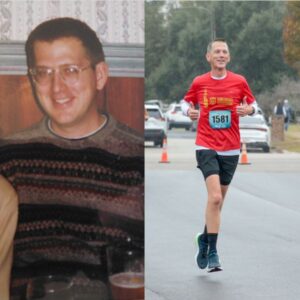
Everything changed when I went to college. My diet consisted of potato chips, beer, and pizza—all my food groups in one meal. Over time, the pounds piled on. By my senior year, I had hit 240 pounds—the heaviest I had ever been.
My First Weight Loss Attempt
After college, I knew I had to make a change. I tried running, but at my weight, my knees couldn’t handle it. Instead, I turned to rollerblading—a craze in the early ‘90s—and spent about an hour a day skating around my neighborhood. I also drastically cut calories, limiting myself to around 1,200 calories per day.
This combination of low-impact exercise and calorie restriction helped me shed weight quickly. I dropped down to 180-185 pounds, and for the first time in a long time, I felt healthier.
The Role of Weight Watchers
Then life happened. I met my future wife, and over time, I started gaining weight again. By the time I proposed, I was back up to 220 pounds.
That’s when I found Weight Watchers. My workplace started a Weight Watchers group, and I decided to join along with about ten women and one other guy. We learned about the points system, which essentially helped us track calories in a simple way.
I continued working out—mostly on a stationary bike—and with the accountability of weekly weigh-ins, the weight started coming off fast. My male coworker and I consistently lost 2-3 pounds per week, which frustrated some of our female colleagues. By the end of the 12-week program, I had dropped 30-35 pounds.
Weight Watchers: A Lifestyle, Not a Diet
The biggest lesson I took from Weight Watchers was shifting from a “diet” mindset to a lifestyle change. It wasn’t about temporary restrictions—it was about learning to eat better permanently.
Since that time, I have never weighed above 185 pounds. For the past 25+ years, I’ve maintained my weight mainly between 170 and 180 pounds.
Modern Tools for Tracking Nutrition
Today, I take my nutrition tracking even further with technology. I use my smartphone to track everything I eat, monitor my macronutrient balance, and ensure I’m getting the right amounts of healthy fats, protein, and carbs.
I also integrate this data with my Garmin watch, smart scale, and blood pressure monitor to track my overall health. Knowing how many calories I’m consuming and burning helps me stay accountable and fine-tune my nutrition for performance.
—
Next Up: Strength Training
In my next post, I’ll talk about the importance of strength training and how it played a crucial role in making me the fastest runner I’ve ever been.










Leave a Reply
You must be logged in to post a comment.